the backup of the tumblr blog of squirrelwrangler aka heget
Author: hegetsquirrelwrangler
call me heget
After that sunny day in Prague, in July of the year 1633—as Christians counted it; for the Jews who made up most of the crowd it was the month of Av and the year was 5393—it wouldn’t have mattered if Don Morris had fallen off the horse entirely—or lost his hat in the river.
Don Morris, he was; and Don Morris he would always remain. For them as well as their descendants who heard the tale. It had been a long time, after all—a very long time—since the Ashkenazim of central and eastern Europe had had a martial hero of their own. The ancient Hebrews had had a multitude, of course; and the Sephardim, in their Iberian heyday, more than a few. But for the Ashkenazim of Europe, for many centuries, heroism had been something that could only be measured by martyrs.
Martyrs were to be cherished, certainly. But it was nice—delightful, in fact—not to have to do it again.
And who was to say? Perhaps never again. There were those other men, after all, who would outlive Don Morris. The much younger Jews who looked very bold and handsome, perched up there on that strange thing that was so much bigger and more deadly than a mere horse. And didn’t seem to be afraid of it at all.
Perhaps the golem was not simply a silly legend. The Maharal had been a very wise man. One of the wisest, even in a city of wise men like Prague.
“The Wallenstein Gambit” Ring of Fire, Eric Flint
For a moment, he reached for the sword, ready to start swinging it around again as he bellowed meaningless but reassuringly martial words. But, as if it had a mind of its own, his hand went to the stock of his rifle instead.
He decided his hand was smarter than his brain. So, he drew the rifle out of the saddle holster his wife had had made for him. Then, with motions than were much surer than those with which he held a sword, jacked a round into the chamber and propped the butt of the rifle on his hip.
And said nothing. He just couldn’t think of anything to say, since it was all too obvious. The brigands were coming and he intended to shoot them down. Simple as that. What was there to say about it?
* * *
His hand was smarter than his brain. Morris Roth had no way of knowing it—and never would—but the easy and assured motion, and the silence that followed, had precisely the right effect on the men on the barricades. Almost all of whom had been nervously watching him, once they realized the fight was finally underway.
In truth, it had a much more profound effect than any amount of sword-waving and speechifying could have had, at least with that assemblage of warriors-that-weren’t. Shopkeepers, butchers, bakers, students—rabbinical students, some of them. With the exception of a few of the former seamen, who’d dealt with pirates, almost none of them had ever been in a battle before of any kind—much less a pitched battle against an army with as ferocious a reputation as Holk’s. True, the tactical situation was completely in their favor, but they didn’t really have the experience to know that.
But Don Morris did—or so, at least, they blithely assumed. He’d told them they could win, hadn’t he? In speech after speech given the day before. And, now that the fury was finally about to fall on their heads, wasn’t Don Morris sitting on his saddle not more than ten yards behind the barricade, as calm as could be? Not even bothering with his sword—not even aiming his rifle. Just …
Waiting.
“The Wallenstein Gambit” Ring of Fire, Eric Flint
The words were written in English. Morris hadn’t known the man in the bed knew the language. He wasn’t surprised, really. Whatever other crimes and faults had ever been ascribed to that man, lack of intelligence had never been one of them.
But Morris didn’t give any of that much thought. His attention was entirely riveted on the message itself.
CHMIELNICKI
I CAN STOP IT
For a moment, it seemed to Morris Roth as if time stood still. He felt light-headed, as if everything was unreal. Since the Ring of Fire, when Morris came to understand that he was really stranded in the seventeenth century, in the early 1630s, not more than a week had ever gone by without his thoughts turning to the Chmielnicki Massacre of 1648. And wondering if there was something—anything—he could do to prevent it. He’d raised the matter with Mike himself, several times before. Only to be told, not to his surprise, that Mike couldn’t think of any way a small town of Americans fighting for its own survival in war-torn Germany in the middle of the Thirty Years War could possibly do anything to stop a coming mass pogrom in the Ukraine.
“How?” he croaked.
Again, the man scrawled; and held up the tablet.
COMPLICATED
STEARNS WILL EXPLAIN
BUT I WILL NEED YOUR HELP
Morris looked at Stearns. Mike had come close and seen the message himself. Now, he motioned toward the door. “Like he says, it’s complicated. Let’s talk about it in the living room, Morris. After the extensive surgery done on him, the man needs his rest.”
Morris followed Mike out of the bedroom, not looking back. He said nothing until they reached the living room. Then, almost choking out the words, could only exclaim:
“Wallenstein?”
Mike shrugged, smiling wryly, and gestured at the couch. He perched himself on an ottoman near the armchair where the soldier was sitting. “Have a seat, Morris. We’ve got a lot to discuss. But I’ll grant you, it’s more than a bit like having a devil come and offer you salvation.”
After Morris was seated, he manage a chuckle himself.
“Make sure you use a long spoon.”
Seeing the expression on Mike’s face, Morris groaned. “Don’t tell me!”
“Yup. I plan to use a whole set of very long-handled tableware, dealing with that man. And, yup, I’ve got you in mind for the spoon. The ladle, actually.”
“He wants money, I assume.” Morris scowled. “I have to tell you that I get awfully tired of the assumption that all Jews are rich. If this new venture of ours takes off, I might be. Faceted jewelry is unheard-of in this day and age, and we should get a king’s ransom for them. But right now … Mike, I don’t have a lot of cash lying around. Most of my money is invested in the business.”
Mike’s smile grew more lopsided still. “Wallenstein’s no piker, like the rest of them. He wants a lot more than your money, Morris. He doesn’t want the gold from the goose, he wants the goose himself.”
Morris raised a questioning eyebrow.
“Figure it out. Your new jewel-cutting business looks to make a fortune, right? So where’s that fortune going to pour into? Grantville—or Prague?”
Morris groaned again. “Mike, I’m over fifty years old! So’s Judith. We’re too old to be relocating to—to—A city that doesn’t have modern plumbing,” he finished, sounding a bit lame even to himself.
Stearns said nothing, for a moment. Then, harshly and abruptly: “You’ve asked me four times to think of a way to stop the coming massacres of Jews in the Ukraine. Probably the worst pogrom in Jewish history before the Holocaust, you told me. This is the best I can manage, Morris. I can’t do it, but Wallenstein … maybe. But it’s a hell of a gamble—and, frankly, one which has a lot more parameters than simply the Jewish problem in eastern Europe.”
Morris’ mind was finally starting to work clearly again. “To put it mildly. Am I right in assuming that Wallenstein came here secretly to propose an alliance? He’ll break from the Austrian Habsburgs and take Bohemia out of Ferdinand’s empire?”
Mike nodded. “That—and the best medical care in the world. Julie’s bullets tore him up pretty good, Morris, and the man’s health was none too good to begin with. The truth is, Doctor Nichols—he did most of the actual surgery—doesn’t think Wallenstein’s likely to live more than a few years.”
“A few years …” Morris mused. “Do you think—?”
“Who knows, Morris? Immediately, the alliance is a godsend for us, as weird as it looks. I’ve discussed it with Gustav Adolf and he agrees. If Becky’s mission to France can’t get us a peace with Richelieu, we’re looking to be at war again soon. A revolt in Bohemia—sure as hell with Wallenstein in charge—will at least take the Austrians out of the equation. As for the Ukraine …”
He shrugged. “We’ve got fifteen years, theoretically—assuming the butterfly effect doesn’t scramble so-called ‘future history’ the way it usually does.”
“It’ll maybe scramble the timing,” Morris said grimly, “but I doubt it’ll do much to scramble what’s coming. The Chmielnicki Massacre was centuries in the making, and the ingredients of it were pretty intractable.”
Mike nodded. Morris knew that after the first time he’d raised the subject with Mike, Stearns had done some research on it. He’d been helped, of course, by his Jewish wife and father-in-law. By now, Morris thought, Mike probably knew more than he did about the situation of eastern European Jewry.
“Intractable is putting it mildly. If it were just a matter of religious or ethnic prejudices and hatreds, it’d be bad enough. But there’s a vicious class factor at work, too. Polish noblemen are the landlords over Ukrainian peasants—whom they gouge mercilessly—and they use the Jews as their rent collectors and tax farmers. So when the Ukrainian peasants finally revolted under Cossack leadership—will revolt, I should say—it’s not too hard to figure out why they immediately targeted the Jews.”
Morris sighed. As much as he was naturally on the side of the Jews in the Ukraine, he knew enough about the situation not to think for a minute that there was any simple solution. In fact, he’d once gotten into a ferocious quarrel with one of the Abrabanel scions who, like a number of the young Jews who had gravitated into Grantville, had become something of a Jewish nationalist.
Arm the Ukrainian Jews! the young man had proclaimed.
“For what?” Morris had snarled in response. “So they can become even more ruthless rent collectors? You stupid idiot! Those Ukrainian peasants are people too, you know. You’ve got to find a solution that they’ll accept also.”
He stared at the large bookcase against one of the walls, where Edith kept her beloved collection of Agatha Christie novels. For a moment, he had a wild and whimsical wish that the great detective Hercule Poirot would manifest himself in the room and provide them all with a neat and tidy answer.
Neat and tidy … in the seventeenth century? Ha! We never managed “neat and tidy” even in our own world.
“All right,” he said abruptly. “As long as Judith agrees, I’ll do it. I’ll try to talk Jason Gotkin into coming with us, too, since he was studying to be a rabbi before the Ring of Fire.”
Having made the pronouncement, he was immediately overwhelmed by a feeling of inadequacy. “But—Mike—I don’t …”
“Relax, Morris,” said Mike, smiling. “You won’t be on your own. Just for starters, Uriel Abrabanel has agreed to move to Prague also.”
Morris felt an instant flood of relief. Rebecca’s uncle was probably an even more accomplished spymaster and political intriguer than her father Balthazar. And if he was elderly, at least he didn’t have Balthazar’s heart problems. So far as anyone knew, anyway.
“Take those young firebrands around Dunash with you, also.”
Morris grimaced. Dunash Abrabanel was the young man he’d had the quarrel with. “I’m not sure they’ll listen to me, Mike. Much less obey me.”
“Then let them stay here and rot,” Mike said harshly. “If nothing else, Morris, I want to give those fellows something to do that’ll keep them from haring off to the Holy Land in order to found the state of Israel. I do not need a war with the Ottoman Empire on top of everything else.”
Morris chuckled. “Mike, not even Dunash is crazy enough to do that. It’s just a pipedream they talk about now and then, usually after they’ve had way too much to drink.”
“Maybe so. Then again, maybe not. They’re frustrated, Morris, and I can’t say I blame them for it. So let’s give them something constructive to do. Let them go to Prague and see if they can convince Europe’s largest Jewish community to throw its support behind Wallenstein.”
Morris was already thinking ahead. “That won’t be easy. The Jews in Prague are Ashkenazim and they’re Sephardic. Not to mention that Prague’s Jewry is orthodox, which they really aren’t—well, they are, but they often follow different—and … Oh, boy,” he ended lamely.
“I didn’t say it would be easy, Morris.”
“Dunash will insist on arming the Jews.”
Mike shrugged. “So? I’m in favor of that anyway. As long as those guns aren’t being used to help Polish noblemen gouge their peasants, I’m all for the Jewish population being armed to the teeth.”
“Will Wallenstein agree to that? As it stands, Bohemian laws—like the laws of most European countries—forbid Jews from carrying weapons.”
Mike jerked at thumb at the bedroom door. “Why ask me? The man’s right in there, Morris. Negotiate with him.”
After a moment’s hesitation, Morris squared his shoulders and marched into the bedroom.
* * *
When he came back out, a few minutes later, he had a bemused expression on his face.
“Well?”
Mutely, Morris showed Mike a sheet of paper from Wallenstein’s legal pad. When Mike looked down at it, he saw Wallenstein’s shaky scrawl.
AGREED
JEWS MAY BE ARMED
BUT MUST SUPPORT ME
OR I WILL BURN DOWN THE GHETTO
“He’s not the nicest guy in the world,” Morris observed. He folded up the sheet and tucked it into his short pocket. “On the other hand …”
Mike finished the thought for him. “He’s ambitious as Satan and, whatever else, one of the most capable men in the world. Plus, he doesn’t seem to share most of this century’s religious bigotry. That doesn’t mean he won’t burn down the ghetto. He will, Morris, in a heartbeat. But he won’t do it because you’re Jews. He’ll do it because you failed him.”
* * *
Judith agreed more quickly than Morris would have thought. Indeed, his wife began packing the next morning. But the first thing she put in the trunk was the biggest ladle they had in the kitchen.
“We’ll need it,” she predicted.
“The Wallenstein Gambit” Ring of Fire, Eric Flint
Yes, I’m pulling long quotes from the Ring of Fire series to spam my dash with why I love this series (aka the fix-it fic for history). And here’s one of my favorite novellas/sub-plots/side characters.
I say it again,” Simpson drove on. “We must seal the border. There’s a tremendous danger of disease, if nothing else.” Simpson pointed an accusing finger at the south wall of the gymnasium. The banners hanging there, proudly announcing North Central High School’s statewide football championships—1980, 1981, and again in 1997—seemed to be surrogates for his damnation. “Those people—” He paused. The pause, as much as the tone, indicated Simpson’s questioning of the term “people.” “Those creatures are plague-carriers. They’ll strip us of everything we own, like locusts. It will be a toss-up, whether we all die of starvation or disease. So—”
Mike found himself marching toward the podium. He felt a little light-headed, as he always had climbing into the ring. Old habit forced him to ignore the sensation, drive it out, bring his mind into focus.
The light-headed sensation was not nervousness so much as sheer nervous energy. And anger, he realized. That too he drove aside. This was no time to lose his temper. The effort of doing so brought home to him just how deeply furious he was. Simpson’s last few sentences had scraped his soul raw.
First thing we do, we put the lawyers and the suits in charge. Then we hang all the poor white trash. As he approached the podium, he caught sight of James Nichols standing next to his daughter. Oh, yeah. String up the niggers too, while we’re at it. The image of a beautiful face came to him. And fry the kikes, of course.
He was at the podium. He forced Simpson away from the microphone with his own equivalent of assertive self-confidence. And if Mike’s aura carried less of authority, and more of sheer dominance, so much the better.
“I agree with the town council’s proposal,” he said forcefully. Then, even more forcefully: “And I completely disagree with the spirit of the last speaker’s remarks.”
Mike gave Simpson a glance, lingering on it long enough to make the gesture public. “We haven’t even got started, and already this guy is talking about downsizing.”
The gymnasium was rocked with a sudden, explosive burst of laughter. Humor at Mike’s jest was underlain by anger. The crowd was made up, in its big majority, of working class people who had their own opinion of “downsizing.” An opinion which, unlike the term itself, was rarely spoken in euphemisms.
Mike seized the moment and drove on. “The worst thing we could do is try to circle the wagons. It’s impossible, anyway. By now, there are probably as many people hiding in the woods around us as there are in the town. Women and children, well over half of them.”
He gritted his teeth, speaking the next words through clenched jaws. “If you expect mine workers to start massacring unarmed civilians—you’d damn well better think again.”
He heard Darryl’s voice, somewhere in the crowd. “Tell ‘em, Mike!” Then, next to him, Harry Lefferts: “Shoot the CEO!”
Another laugh rippled through the gym. Harsher, less humorous. The title Chief Executive Officer, for most of that blue-collar crowd, vied in popularity and esteem with Prince of Darkness. The Four Horseman of the Apocalypse, rolled into one, wearing a Brooks Brothers suit and holding a pink slip in his hand.
Sorry. No room in the Ark for you. Nothing personal. You’re just useless in today’s wonderful global economy.
Mike built on that anger and drove on. “His whole approach is upside down and ass-backwards. ‘Seal off the town?’ And then what?” He swept his hand in a circle. “You all heard what Greg said earlier. He estimates the disaster—the Ring of Fire—yanked an area about six, maybe seven miles in diameter with us. You know this countryside, people. We’re talking hills, mostly. How much food do you think we can grow here? Enough for three thousand people?”
He let that question settle for a moment. Simpson started to say something, angrily pushing toward the microphone. Mike simply planted a large hand on the man’s chest and pushed him back. Simpson stumbled, as much from the shock of being “manhandled” as the actual shove itself.
“Don’t even think about taking this microphone from me, big shot,” growled Mike. He hadn’t intended the statement to be public, but the microphone amplified his words through the gymnasium. Another laugh came from the crowd. Almost a cheer, actually—as if they were applauding a dramatic slam dunk by the high school’s favorite player.
Mike’s next words were spoken softly, but firmly. “Folks, we’ve got to face the truth. We’re here, and we’re here to stay. Forever.” He paused. “Forever,” he repeated. “We can’t think in terms of tomorrow, or the day after. Or even next year. We’ve got to think in terms of decades. Centuries.”
Simpson was gobbling something. Mike ignored him. Drive on. Drive it home.
“We can’t pretend those people out there don’t exist. We can’t drive them away—and, even if we could, we can’t drive away the ones who’ll come next.” He pointed a finger at Melissa Mailey, the high school’s history teacher. “You heard what Ms. Mailey told us earlier. We’re smack in the middle of one of the worst wars in history. The Thirty Years War, it’s called. Not halfway into it, from what she said. By the time this war is over, Germany will be half-destroyed. A fourth of its population—that includes us, now, ’cause we’re here in the middle of it—dead and buried. There are gigantic armies out there, roaming the countryside. Plundering everything, killing everybody. We’ve seen it with our own eyes. Our police chief’s lying in his bed with half his shoulder blown off.” He glanced at Lefferts, up in the stands. The young miner was easy to spot, because of his bandages. “If Harry had any sense, he’d be lying in bed, too.”
Another laugh rang through the gym. Lefferts was a popular young man, as much for his boundless energy as anything else. Mike turned and pointed to Rebecca. “She and her father were almost massacred. Robbery, rape and murder—that’s standard operating procedure for the armies roaming this countryside.
"You don’t believe me?” he demanded. He gestured angrily at the door leading out of the gym. “Ask the farmer and his wife we barely kept alive. They’re not thirty yards from here, in the makeshift hospital we set up in the school. Go ahead, ask them!”
Simpson was still gobbling. Mike turned to him, snarling. “I guess this clown thinks we can keep those armies off by blowing hot air on them.”
Another roar of laughter. Most of the crowd was with him now, Mike could sense it. Rooting for the home team, if nothing else.
“Sure, we can fight them off for a while. We’ve got modern weapons, and with all the gun nuts living around here"—another mass laugh—"we’ve got the equipment and supplies to reload for months. So what? There’s still only a few hundred men who can fight. Less than that, once you figure out how much work’s got to be done.”
Now he pointed to Bill Porter, the power plant’s manager. “You heard what Bill had to say. We’ve got enough coal stockpiled to keep the power plant running for six months. Then—” He shrugged. “Without power, we lose most of our technological edge. That means we’ve got to get the abandoned coal mine up and running. With damn few men to do it, and half the equipment missing. That means we have to make spare parts and jury-rigged gear.”
He scanned the crowd. When he spotted the figure he was looking for, he pointed to him.
“Hey, Nat! How much of a stockpile do you keep in your shop? Of steel, I mean.”
Hesitantly, the owner of the town’s largest machine shop rose to his feet. He was standing about half a dozen tiers up in the crowd.
“Not much, Mike,” he called out. “We’re a job shop, you know. The customer usually supplies the material.” Nat Davis glanced around, looking for the other two machine shop proprietors. “You could ask Ollie and Dave. Don’t see ’em. But I doubt they’re in any better position than I am. I’ve got the machine tools, and the men who can use them, but if we aren’t supplied with metal—” He shrugged.
A voice came from across the gym, shouting. That was Ollie Reardon, one of the men Davis had been looking for. “He’s right, Mike! I’m in no better shape than Nat. There’s a lot of scrap metal lying around, of course.”
Mike shook his head. “Not enough.” He chuckled. “And most of it’s in the form of abandoned cars in the junkyard or somebody’s back yard. Have to melt them down.” He emphasized his next words by speaking slowly. “And that means we have to build a smelter. With what? And who’s going to do the work?”
He paused, allowing the words to sink in. Simpson threw up his hands and stalked angrily back to his seat. Mike waited until Simpson was seated before he resumed speaking.
He suppressed a grin. Kick ’em when they’re down, by God! Mike gestured toward Simpson with his head. “Like I said, I disagree with everything about his approach. I say we’ve got to go at this the exact other way around. The hell with downsizing. Let’s build up, dammit!”
Again, he swept his hand in a circle. “We’ve got to expand outward. The biggest asset we’ve got, as far as I’m concerned, is all those thousands of starving and frightened people out there. The countryside is flooded with them. Bring them in. Feed them, shelter them—and then give them work. Most of them are farmers. They know how to grow crops, if they don’t have armies plundering them.”
His next words came out growling. “The UMWA will take care of that.” A chorus of cheers came up, mostly—but by no means entirely—from the throats of the several hundred coal miners in the gym.
Drive it through. “We’ll protect them. They can feed us. And those of them with any skills—or the willingness to learn them—can help us with all the other work that needs to be done.”
He leaned back from the microphone, straightening his back. “That’s what I think, in a nutshell. Let’s go at this the way we built America in the first place. ‘Send me your tired, your poor.’ ”
Angrily, Simpson shouted at him from the sidelines. “This isn’t America, you stupid idiot!”
Mike felt fury flooding into him. He clamped down on the rage, controlling it. But the effort, perhaps, drove him farther than he’d ever consciously intended. He turned to face Simpson squarely. When he spoke, he did not shout. He simply let the microphone amplify the words into every corner of the gymnasium.
“It will be, you gutless jackass. It will be.” Then, to the crowd: “According to Melissa Mailey, we now live in a world where kings and noblemen rule the roost. And they’ve turned all of central Europe—our home, now, ours and our childrens’ to come—into a raging inferno. We are surrounded by a Ring of Fire. Well, I’ve fought forest fires before. So have lots of other men in this room. The best way to fight a fire is to start a counterfire. So my position is simple. I say we start the American Revolution—a hundred and fifty years ahead of schedule!
1632, Eric Flint
The crux of the series, and for a time travel SF yarn published in 1999, well, the saying that politics stays the same seems relevant. And don’t worry- the series is less ‘American Exceptionalism’ and more ‘Peasant Revolutionaries Now Have Proof that They Will Win History.’
the next eldest brother had to take over leadership when said elf was unwillingly separated from his people
very very tall (was known for it)
very good-looking
with a rare hair color btw
attention is called in-text to the fey light of his eyes
has a temper but can sometimes control it
did have a scene where he naively believed in good intentions/did not see betrayal
has an on-screen personality; it has flaws and nuances
acknowledges his mistakes and repents
throws shade, makes dismissive comments, he’s sassy
Don’t need the Valar, thanks but no thanks
left Valinor, lives rest of his life in Beleriand
feared and hated by Morgoth
fights against Morgoth’s armies sent personally to destroy him or his family
Neither Morgoth nor any of the Dark Lord’s forces ever kill him
allied with the dwarves of Nogrod and Belegost and fought a large battle against Morgoth together
gifts were exchanged with the dwarves
Also allied with other elves
Finrod visits him
maintains a rather large network of political allies
including a deep personal friendship with another elven king
Said king dies in that large battle, was too late to come to his friend’s rescue
so instead he slaughters hundreds of orcs in revenge and then has to flee to safety
Also allies with humans
but doesn’t have as close a relationship with them as some other Noldor princes and their Edain
one human male will go live with him and be treated with love and honor
quasi-adopted mortal son
makes a terrible Oath involving the recovery of a Silmaril
eventually does gain possession of a Silmaril
this leads to his death
tragic
his brother survives him and spends the rest of his life next to a seashore
I’m describing Elu Thingol, btw. Not Maedhros
The inescapable collective boner that the Silm Fandom has for Maedhros is my least favorite thing. Worse than championing Feanor, the misogynistic double standard for female characters, it’s how Maedhros is lionized and prioritized. Thanks to how impossible it is to escape that, he has slithered his way down to my second least favorite character – possibly of all.
WIP of the Tifa Lockhart cosplay for a DCSHG. The red gloves were a fiddly thing to make – but they are removeable. I still have to make the suspenders/belt and black socks. The shoes are wrong (I have a few tennis shoes but no duplicates that I can customize – though looking at the molds, I think Bumblebee’s would work best). And the final details on the arms.
just as I promised in one of the previous posts, this is somewhat of a relaxation project where I don’t go into too much details, just having lots of fun.
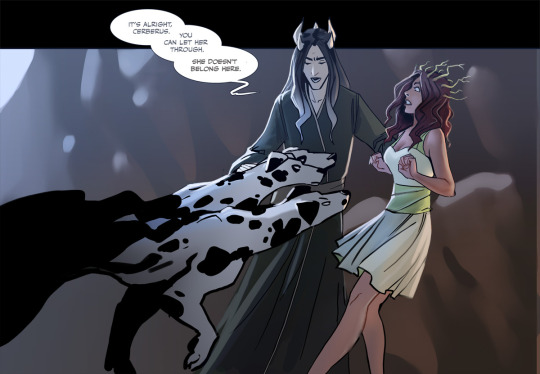
here’s a Cerberus, he’s a good boy(s) :p
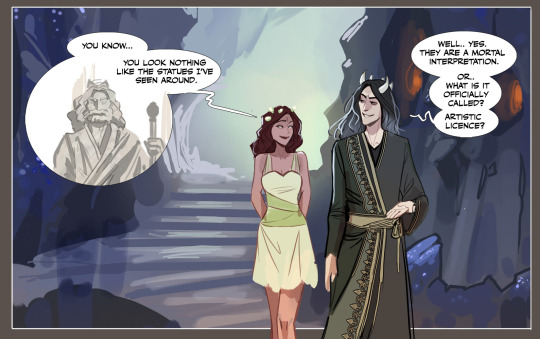
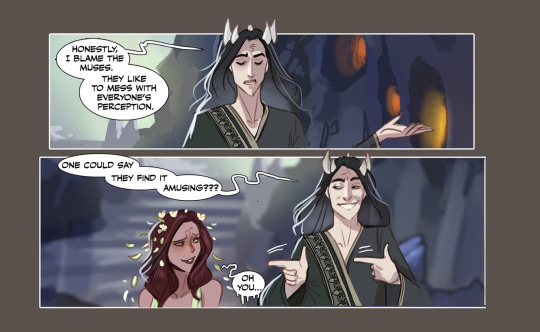
here’s some of Hades/Persephone chemistry, like I stated on twitter, this is why I can’t write romance. I just can’t help myself not to make silly jokes XDDD
took break from the next hanbok (the quasi-Tifa one to go with the quasi-Aerith) – using a lot of black pleather and black and red ribbon trim – but then shifted gears to make a micro-miniskirt with the scraps and now trying to make the rest of the canon outfit as best I can – the fabric parts at least. anyone want pics?
Also made wig (well, multiple failed attempts and then one that isn’t good but is useable that I’m calling the crappy Uinen wig
too late- need to go to sleep- but! I finished one of the red gauntlet/gloves- and actually made it removeable. And the black sleeve-glove bit that goes with it. Tomorrow it’s finish the other side’s two glove/sleeve, make the elbow pad, black socks, belt, and attach suspenders. I don’t have the right shoes or can customize them- but have a pair that’s at least red tennis shoes. Now the real problem is my only black-haired dolls are the Wonder Woman- which the skintone and eyes are wrong. But at least my Diana is shaping up to have a great cosplay. Okay, the real question is do I make padding for the t-shirt.